



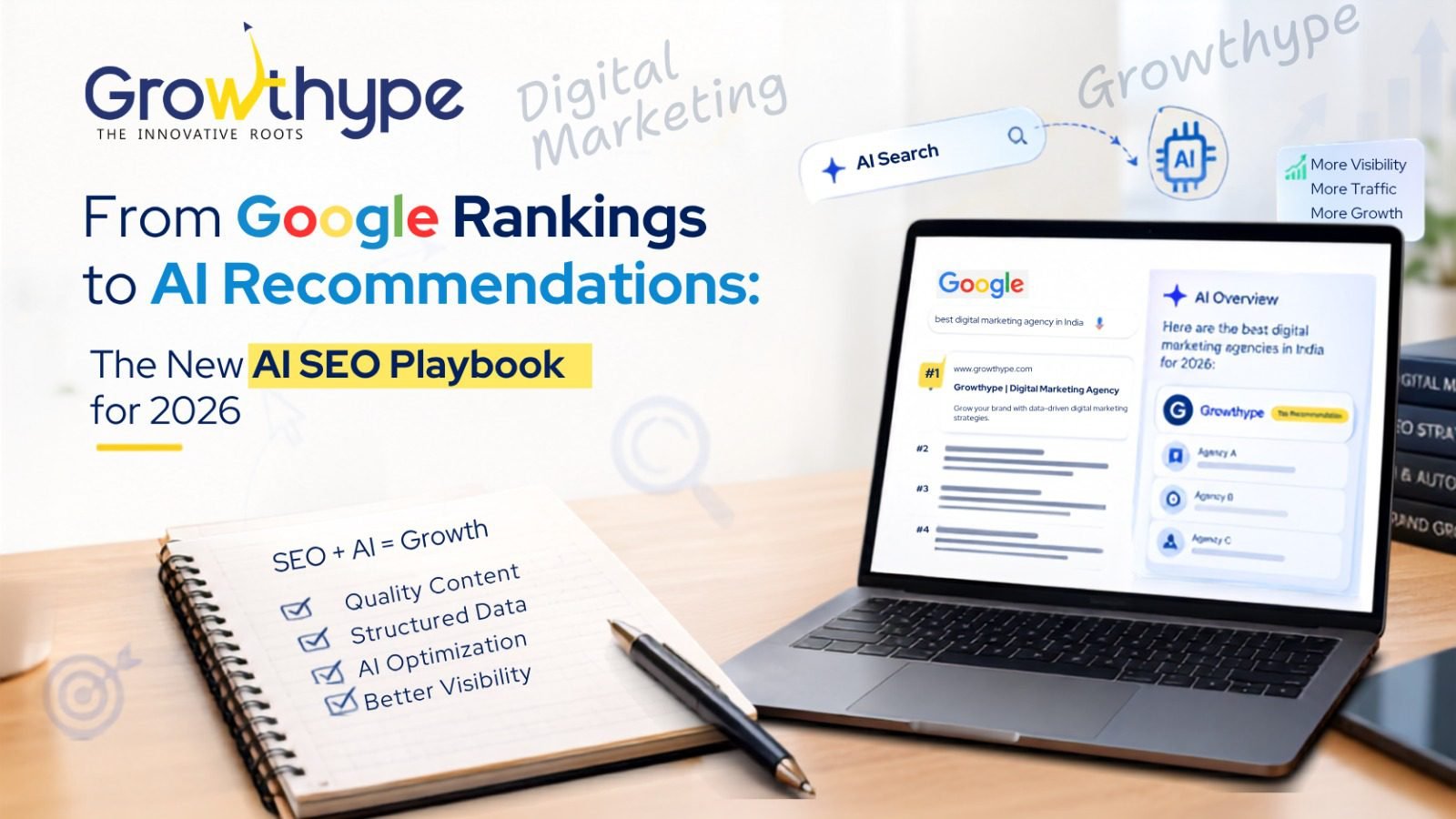
AI SEO is changing how businesses approach search visibility, helping brands adapt to a search environment where users increasingly discover information through AI-powered answers, recommendations, and conversational search.
For years, SEO’s goal was straightforward: rank higher on Google, attract more clicks, and turn organic traffic into customers.
But search is changing.
In 2026, people are no longer relying only on traditional Google results to discover information, products, services, and brands. They are increasingly using AI-powered search experiences, conversational queries, and recommendation-based platforms to find answers.
This is where AI SEO is becoming increasingly important.
Google AI Overviews and AI Mode are changing how information is presented, while platforms such as ChatGPT, Gemini, and Perplexity are becoming part of the modern discovery journey. Google has also emphasized that traditional SEO fundamentals remain important for its AI-powered search experiences.
For businesses, this creates a new challenge—and a major opportunity.
The question is no longer, “How do we rank #1?”
It is:
“How do we make our brand visible, credible, understandable, and recommendable in an AI-driven search environment?”
For businesses looking to adapt their digital strategy to this changing search landscape, Growthype focuses on SEO, content, PPC, social media, and data-backed digital marketing strategies.
That is the new AI SEO playbook.
Why SEO Is Changing in 2026
From Search Rankings to AI Answers
Traditional search requires users to enter a query, review results, click websites, and find the information they need.
AI-powered search can provide a synthesized response based on information from multiple sources.
This changes the way brands need to think about visibility.
A business can no longer focus exclusively on ranking individual pages. Its content also needs to provide information that search engines and AI systems can understand, contextualize, and potentially reference.
This does not mean traditional SEO is disappearing.
Instead, AI SEO expands traditional SEO by considering how people discover and consume information through AI-powered experiences.
Why Ranking #1 Is No Longer the Entire Strategy
Ranking highly on Google remains valuable. However, modern search visibility can now include:
-Organic search rankings
-Google AI Overviews
-Google AI Mode
-Featured answers
-Brand mentions
-AI citations
-Knowledge panels
-Local search results
-Image and video discovery
AI SEO is therefore broader than achieving a particular keyword position.
The objective is to build search visibility and brand authority across the modern discovery ecosystem.
What is AI SEO?
AI SEO is the process of optimizing a website, content strategy, and brand presence for a search environment increasingly influenced by artificial intelligence.
It combines established SEO practices with concepts such as:
- 🔍 AI Search Optimisation
- 🧠 Semantic Search
- 🏷️ Entity SEO
- 🕸️ Topical Authority
- 🛡️ E-E-A-T
- 💬 Answer Engine Optimisation (AEO)
- ✨ Generative Engine Optimisation (GEO)
- 📋 Structured Content
- 👁️ AI Visibility
The foundation remains the same: create useful information that satisfies user intent.
The difference is that AI SEO also considers how machines interpret, summarize, connect, and recommend information.
Traditional SEO vs AI SEO
Traditional SEO typically asks:
- 🔎 What keywords are users searching?
- 📄 Which pages should rank?
- 📈 How can organic traffic increase?
- 🚀 How can rankings improve?
An AI SEO strategy asks additional questions:
- 🤖 Does AI clearly understand what the business does?
- 🎯 Does the content fully answer the user’s question?
- 🔐 Is the information accurate, reliable, and trustworthy?
- 🌐 Is the brand represented consistently across the web?
- 🧠 Does the content demonstrate genuine expertise and experience?
- 📌 Can important information be easily understood, extracted, and referenced?
This is why traditional SEO, AEO, and GEO are increasingly interconnected.
How GEO and AEO Support AI SEO
Answer Engine Optimization
AEO, or Answer Engine Optimization, focuses on creating content that clearly answers users’ questions.
For example, an effective AEO page may define a concept, answer a question directly, provide supporting information, and organize the content in an easily understandable format.
Generative Engine Optimization
GEO, or Generative Engine Optimization, focuses on improving visibility within generative AI experiences.
However, businesses should not treat GEO as a replacement for SEO.
A stronger approach is to integrate GEO and AEO into a broader AI SEO strategy built on strong technical foundations and useful content.
Google’s guidance indicates no special AI-only technical requirements or secret schema that guarantee visibility in AI Overviews or AI Mode. Existing SEO fundamentals continue to matter.
The New AI SEO Playbook for 2026
1. Create Content With Genuine Experience
AI can generate generic content quickly.
As a result, original human experience becomes increasingly valuable.
Instead of publishing another article that repeats the same information found across dozens of websites, brands should add:
- 🔬 Original research and industry insights
- 📣 First-hand campaign experience
- 🧠 Expert opinions and strategic analysis
- 📊 Proven case studies and results
- 💡 Real client and campaign examples
- 📈 Data-backed insights and performance metrics
- ⚖️ Clear comparisons and competitive analysis
- 🛠️ Actionable strategies and practical takeaways
This gives content something that generic AI-generated pages often lack: a genuine point of view.
For AI SEO, originality is not simply a content advantage. It can become a meaningful differentiator.
2. Build Topical Authority
One article rarely establishes expertise.
A stronger AI SEO strategy builds a connected network of content around a subject.
For a digital marketing agency, for example, related topics could include:
SEO → AI SEO → GEO → AEO → content marketing → technical SEO → PPC → digital PR → analytics
These relationships create topical depth and help establish what a brand knows.
Instead of producing content simply because a keyword has search volume, businesses should develop content clusters that comprehensively address their audience’s questions.
3. Strengthen Entity SEO
- 🤖 AI Context
- 🏢 Brand Entity
- ⚡ Services & Solutions
- 🎯 Industry Relevance
- 🧠 Expertise Signals
- 🌐 Topical Authority
This is where entity SEO becomes important.
Businesses should keep information consistent across their website, author profiles, social platforms, business listings, industry publications, reviews, and other credible third-party sources.
The goal is to create a clear and recognizable digital identity.
4. Make Content Easy for AI and Humans to Understand
Good AI SEO content should also work well for human readers.
Use:
- 🧭 Clear content structure
- ⚡ Concise, direct answers
- 💡 Simple definitions
- 📋 Scannable lists
- 📊 Useful comparison tables
- 🔍 Descriptive subheadings
- 🔗 Contextual internal linking
- 🎬 Relevant visual content
Avoid creating content that is hard to navigate just because it contains keywords.
The best optimization starts with usability.
5. Strengthen E-E-A-T
E-E-A-T stands for:
Experience, Expertise, Authoritativeness, and Trustworthiness.
For an effective AI SEO strategy, brands should make their expertise visible rather than simply claiming to be experts.
Show readers:
- 👤 Content Ownership
- 🧠 Expertise & Experience
- 📚 Sources & References
- 📅 Content Freshness
- 🔬 Original Research
- 📝 Editorial Transparency
- 🔄 Transparent Updates
6. Build Authority Beyond Your Website
Your website shouldn’t be the only place your brand appears.
Digital PR, backlinks, expert contributions, industry publications, reviews, partnerships, and credible third-party mentions can strengthen your online authority footprint.
This is an important part of modern AI SEO because brand understanding does not exist exclusively within your own website.
The wider digital ecosystem contributes to how a business is discovered and understood.
How Google AI Overviews and AI Mode Affect AI SEO
Google’s AI-powered search experiences are changing how users interact with search results.
Instead of simply scanning links, users can increasingly receive synthesized information and then explore supporting sources.
For businesses, this means continuing to invest in:
- ⚙️ Technical SEO
- 🎯 Search Intent
- ✍️ Content Quality
- 🔗 Internal Linking
- 🧩 Structured Data
- ⚡ Page Experience
- 🎥 Images & Video
- 👤 Author Credibility
- 🌐 Brand Authority
The important point is that AI SEO does not replace traditional SEO fundamentals.
It builds upon them.
A technically poor website with weak content will not become successful simply because it adds the words “AI SEO” to its pages.
Measuring AI SEO Success
Look Beyond Keyword Rankings
A modern SEO strategy should measure more than search-result positions.
Businesses should consider tracking:
- 👁️ Organic Impressions
- 🖱️ Organic Clicks
- 📈 Keyword Rankings
- 🎯 Organic Conversions
- 🔎 Branded Searches
- 🤖 AI Visibility
- 📚 AI Citations
- 🔗 Referral Traffic
- 💬 User Engagement
- 🌐 Brand Mentions
- 🔄 Assisted Conversions
panded measurement around generative AI search experiences, giving marketers additional ways to understand how their pages perform as search evolves.
From Ranking Visibility to Brand Visibility
The central measurement question is changing.
Yesterday, marketers asked:
“Where do we rank?”
Today, the better question is:
“Where is our brand being discovered?”
That could be through a traditional Google result, an AI Overview, an AI-generated response, a citation, a recommendation, or a branded search.
This broader perspective should become central to AI SEO planning in 2026.
The Future of AI SEO: Rankings + Recommendations
The future is not SEO versus AI.
It is SEO plus AI.
Businesses that continue focusing exclusively on traditional rankings may miss emerging discovery opportunities.
At the same time, businesses that chase every new AI marketing acronym without strong SEO fundamentals may waste valuable resources.
The smarter strategy is to build a strong foundation:
- ⚙️ Build technically sound websites
- ✍️ Publish original, people-first content
- 🧠 Demonstrate genuine expertise
- 📚 Build topical authority
- 🧩 Strengthen entity signals
- 🌐 Earn credible brand mentions
- 🎯 Understand and match search intent
- 🤖 Monitor organic and AI-driven visibility
In 2026, successful AI SEO isn’t about finding a secret formula to get recommended by an AI system.
It is about becoming the kind of source that deserves to be found, trusted, cited, and recommended.
The question is no longer simply:
“Can we rank?”
It is:
“Can we become the answer people—and AI—trust?”
Frequently Asked Questions About AI SEO
1. Is traditional SEO dead in 2026?
No. Traditional SEO remains the foundation of search visibility. Technical accessibility, indexing, useful content, internal linking, search intent, and website experience continue to matter in AI-powered search.
2. What is AI SEO?
AI SEO is a search optimization approach that combines traditional SEO with strategies designed for an increasingly AI-driven search environment.
3. What is the difference between AI SEO, AEO, and GEO?
AI SEO is the broader strategy. AEO focuses on providing direct answers to user questions, while GEO focuses on improving visibility within generative AI experiences.
4. Can businesses optimize for ChatGPT and Google AI?
Businesses can improve their overall AI search visibility by publishing authoritative, original, crawlable, and clearly structured content. However, there is no guaranteed formula for receiving an AI recommendation.
5. Does E-E-A-T matter for AI SEO?
Yes. Demonstrating experience, expertise, authoritativeness, and trustworthiness helps establish content credibility and user confidence.
6. How can a business improve its AI SEO?
Start with strong technical SEO and people-first content. Then build topical authority, entity clarity, original expertise, credible third-party mentions, and a consistent brand presence across the web.
About the Author
Growthype Editorial Team creates practical insights on SEO, AI SEO, PPC, content marketing, branding, and digital growth. The team reviews and updates content as search technology and digital marketing practices evolve.